Children
Practical, age-appropriate adaptive skills connected to family priorities, meaningful routines, and authorized outcomes.
Nexoria is preparing to serve regional-center-eligible individuals across the lifespan when an authorized need for Adaptive Skills Training is identified.
Home and community settings, subject to staffing, travel, communication-access, safety, and professional supervision capacity.

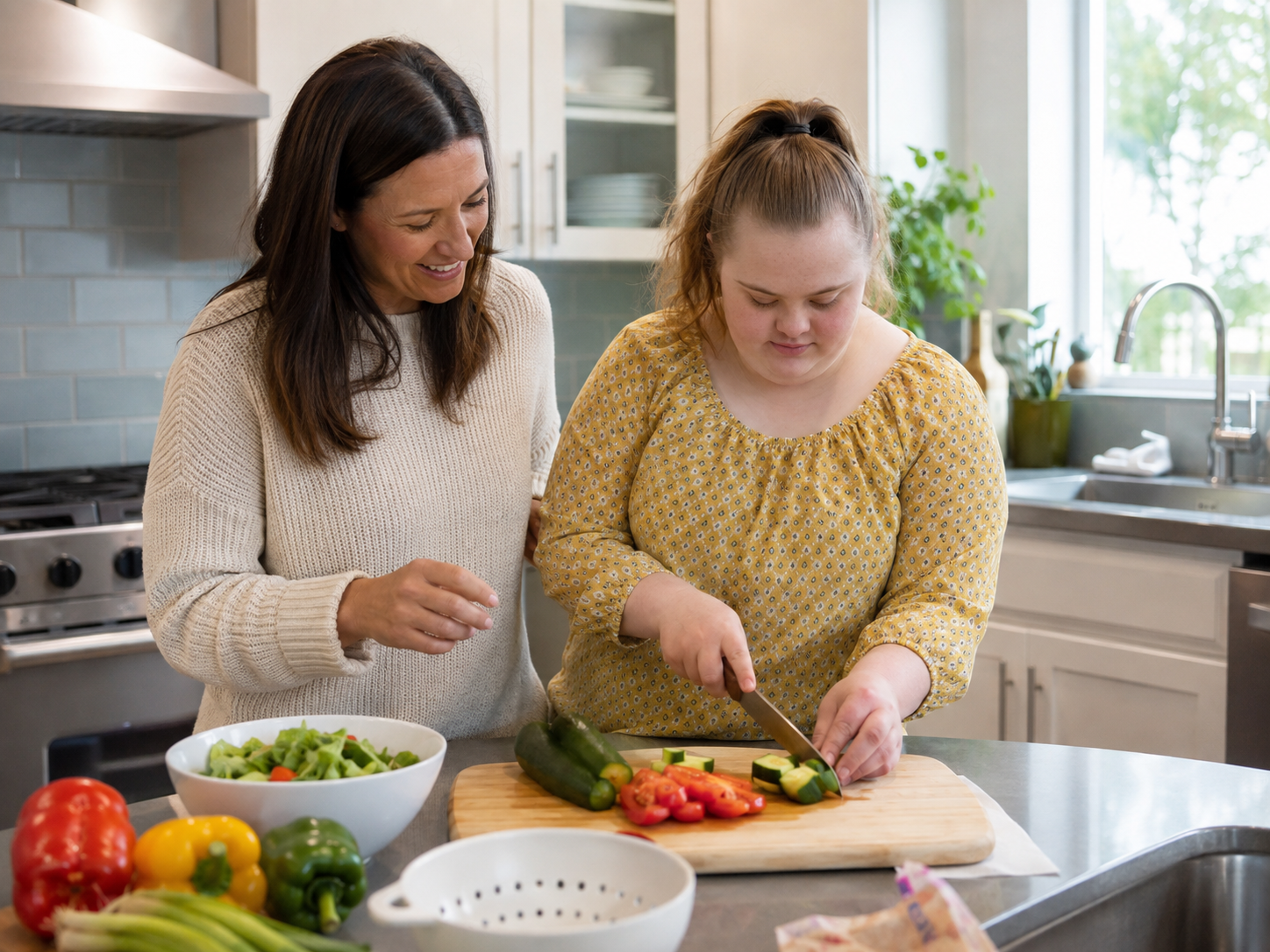
Goals change with age, priorities, environment, and support needs. The person-centered standard does not.
Practical, age-appropriate adaptive skills connected to family priorities, meaningful routines, and authorized outcomes.
Skills supporting greater self-direction, community access, routines, organization, safety, and preparation for adult life.
Functional independence, household and community participation, communication, self-management, choice, and sustainable natural supports.
After vendorization, Nexoria will accept referrals only when the authorized need is within Adaptive Skills Training scope and can be served safely and responsibly.
Goals are selected because they matter in the individual’s life—not simply because a standardized assessment lists them.Nexoria service philosophy
Respect, privacy, age-appropriate opportunities, and freedom from coercion or humiliation.
Meaningful choice, participation, self-advocacy, and the ability to express dissatisfaction or decline activities.
Access to ordinary community settings, relationships, resources, technology, education, work, and recreation.